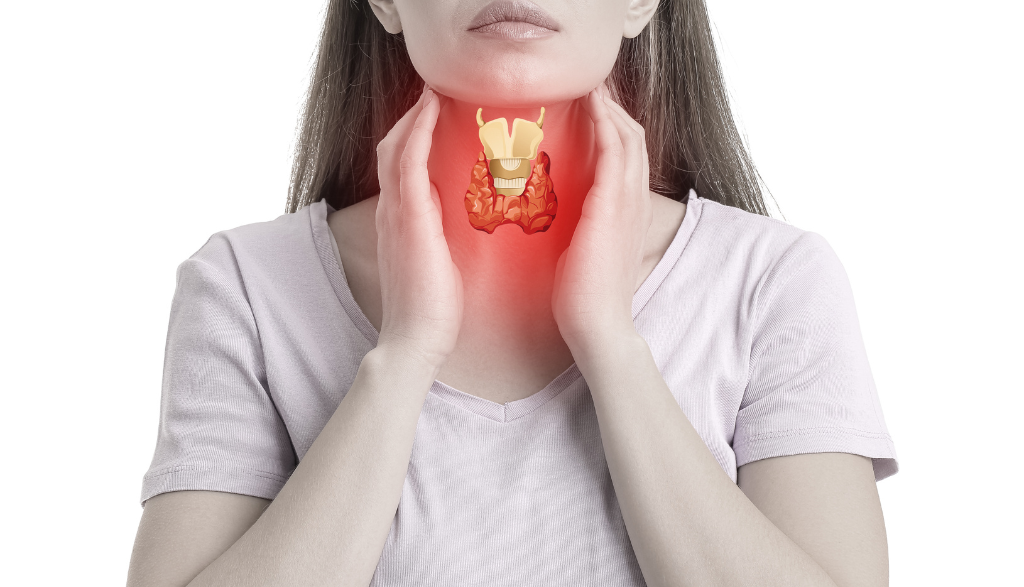

Open any tirzepatide prescription box and the first thing you’ll encounter, printed in bold inside a thick black border, is a warning about thyroid tumors. For many patients, that warning triggers immediate alarm. A medication connected to cancer? That’s a hard thing to process, especially when you’re trying to make a health decision. But here’s what most coverage of this topic fails to tell you: the warning and the actual risk are not the same thing. Understanding Tirzepatide and Thyroid Cancer Risk properly requires separating what happened in animal studies from what the evidence in humans actually shows.
How the Black Box Warning Works
A boxed warning — nicknamed a “black box” warning because of the bold border surrounding it — is the FDA’s most serious tool for flagging potential drug risks. Its presence on a label does not mean the risk is confirmed or common. It means the FDA wants prescribers and patients to be explicitly aware of a specific concern.
For tirzepatide, the boxed warning covers one thing: the potential for thyroid C-cell tumors. Both Mounjaro and Zepbound carry this same warning, because both contain the same molecule. The warning is also not unique to tirzepatide; it applies to the entire class of GLP-1 receptor agonists, including semaglutide and liraglutide.
Where the Warning Came From: The Rat Studies
The thyroid concern originated from a two-year carcinogenicity study conducted in rats. Across both male and female animals, tirzepatide produced a statistically significant, dose-dependent increase in thyroid C-cell tumors, including both adenomas (benign) and carcinomas (malignant).
This is the scientific basis for the warning. It is real data. The question, which is a genuine scientific question, is whether rats and humans respond to tirzepatide’s effects on thyroid tissue in the same way.
A shorter study conducted in genetically modified mice (rasH2 transgenic mice) showed no tumor formation at any dose. This inconsistency between species is itself informative.
The Biology That Changes the Interpretation
Rodents and humans have fundamentally different thyroid architectures.
Rat thyroid C-cells — the cells that produce calcitonin and are implicated in medullary thyroid carcinoma express GLP-1 receptors at a much higher density than human thyroid C-cells do. When tirzepatide activates those receptors, it stimulates C-cell proliferation in rats at a rate that human thyroid tissue would not mirror.
This is why the FDA’s own label language is measured. It states that the human relevance of rodent thyroid C-cell tumors caused by tirzepatide has not been determined. The agency did not conclude that the rat findings translate to humans. It concluded that it doesn’t know, and requires the warning until long-term human data provides clarity.
Most thyroid specialists and endocrinologists view the rat model as a poor predictor of human thyroid cancer in this context.
What Actual Human Data Shows
This is where Tirzepatide and Thyroid Cancer Risk looks very different from what the warning label alone might suggest.
Across the entire SURPASS clinical trial program (for diabetes) and the SURMOUNT program (for obesity), covering tens of thousands of participant-weeks of exposure, not a single case of medullary thyroid carcinoma was recorded. Zero cases. In either group. At any dose.
A comprehensive 2025 meta-analysis examined cancer outcomes across 13 separate randomized controlled trials involving more than 13,700 tirzepatide patients. The finding: tirzepatide did not increase the risk of any specific cancer type — including thyroid cancer — compared to placebo, insulin, or other GLP-1 receptor agonists.
A separate retrospective cohort study published in 2025 used real-world electronic health record data from a large collaborative network.
After carefully balancing the tirzepatide-treated group against a comparison group for cancer history, genetic factors, and radiation exposure, researchers found that tirzepatide users actually had a significantly lower rate of malignant thyroid cancer, not higher (Relative Risk 0.348, p less than 0.001).
Calcitonin — a blood protein that serves as a biomarker for medullary thyroid carcinoma, did rise modestly with higher tirzepatide doses compared to placebo. However, clinical experts note that the significance of this rise has not been established. No elevation in calcitonin translated into an actual MTC diagnosis in any trial.
A 2026 white paper from the Clayman Thyroid Center — one of the highest-volume thyroid cancer surgical programs in the world, treating roughly 2,000 thyroid cancer patients annually — found no clinical pattern linking GLP-1 drug use to medullary thyroid cancer presentations in their patient population.
Understanding What Type of Thyroid Cancer the Warning Covers
This distinction is frequently glossed over, and it matters enormously.
Thyroid cancer is not a single disease. There are four primary subtypes:
Papillary thyroid carcinoma is by far the most common, accounting for roughly 80% of all thyroid cancers. It is generally slow-growing and highly treatable.
Follicular thyroid carcinoma accounts for about 10 to 15% of cases and is also generally manageable with standard treatment.
Medullary thyroid carcinoma (MTC) arises from the C-cells — the same cells seen in the rat studies. It represents only 3 to 4% of all thyroid cancers. This is the specific subtype referenced in tirzepatide’s boxed warning.
Anaplastic thyroid carcinoma is the rarest and most aggressive form.
Multiple human studies have confirmed that tirzepatide does not increase the risk of papillary thyroid carcinoma, the common kind. The warning applies only to MTC, and in human evidence, no MTC cases have emerged.
Who Should Not Use Tirzepatide Due to Thyroid Risk
There is a clearly defined group for whom tirzepatide is contraindicated because of thyroid-related factors:
Anyone with a first-degree family member who has been diagnosed with medullary thyroid carcinoma cannot use tirzepatide.
Anyone diagnosed with Multiple Endocrine Neoplasia syndrome type 2 (MEN 2) — a hereditary endocrine condition that significantly elevates MTC risk — cannot use tirzepatide.
Outside of these three specific conditions, the FDA does not restrict tirzepatide based on thyroid history. Common thyroid conditions such as hypothyroidism, hyperthyroidism, Hashimoto’s disease, or thyroid nodules do not automatically disqualify someone from using the medication.
Does Tirzepatide Require Special Thyroid Monitoring?
The FDA label explicitly addresses this and is clear: routine monitoring of serum calcitonin levels or routine thyroid ultrasound is not recommended for patients on tirzepatide who do not have specific risk factors for MTC.
In practical terms, your doctor should not be ordering extra thyroid scans or blood panels simply because you’re taking tirzepatide, unless you have symptoms or personal risk factors that warrant investigation.
Symptoms that should always be reported to your physician, regardless of your medication status, include a palpable lump or swelling in the neck, difficulty swallowing, unexplained voice hoarseness that doesn’t resolve, or breathing discomfort. These can indicate thyroid pathology requiring evaluation.
What the Evidence Actually Means for Most Patients
Tirzepatide and Thyroid Cancer Risk, when examined through the lens of available human evidence, looks quite different from what the black box label might initially suggest.
The warning is real and necessary; it reflects genuine uncertainty and is based on documented animal findings. Regulatory caution in the face of uncertainty is appropriate.
But human evidence accumulated over more than three years of broad clinical use has not validated the rodent signal. No MTC cases have emerged in controlled trials. Real-world studies using large patient databases have found no increase in thyroid cancer risk and, in some analyses, have suggested the opposite.
For eligible patients without a personal or family history of MTC or MEN 2, the current scientific consensus is that tirzepatide’s established metabolic and cardiovascular benefits are not outweighed by a meaningful thyroid cancer risk in humans.
A Patient’s Honest Reaction
“My first reaction to that black box warning was — absolutely not,” says Claudia, 44, from Georgia. “I had read about it online, and I thought, I’m not risking cancer for weight loss. But my endocrinologist sat with me and walked through the actual human trial data. No cases. Not one. She explained it was based on rats. After that conversation, I felt informed instead of scared. I’ve been on Zepbound for seven months, and I’ve lost 38 pounds.”
Claudia’s experience reflects what many patients go through — initial alarm, followed by clarity once the evidence is actually explained.
Starting Treatment With Full Transparency
TirzepatideRX Online operates on the principle that patients make better decisions when they fully understand the medications they’re taking. Every new patient receives a physician consultation that reviews their health history — including thyroid and cancer history — before a prescription is written.
The program is structured around three access options:
- Monthly at $399/month — physician-supervised weekly injections delivered to your home, with monitoring and no locked-in commitment.
- 3 months for $1,125 total — a complete first-quarter supply, medical assessments every three months, and priority access to your care team.
- 6 months for $2,199 total — the best long-term value, with bi-monthly physician oversight, nutritional support, and premium care throughout.
If the thyroid question is part of what’s holding you back, bring it to your consultation. Start that conversation here or read more clinically grounded content at the TirzepatideRX blog.
Frequently Asked Questions
Does tirzepatide cause thyroid cancer in humans?
Based on all available clinical trial and real-world data, no cases of medullary thyroid carcinoma have been linked to tirzepatide in humans; the boxed warning reflects animal data whose human relevance remains undetermined.
Why does the black box warning exist if humans haven’t shown this risk?
The FDA issues precautionary warnings based on meaningful animal findings even before human evidence confirms or refutes the risk; this is standard regulatory practice for novel medications.
Should I get my calcitonin checked before starting tirzepatide?
The FDA does not recommend routine calcitonin testing for patients without MTC risk factors; your physician will advise based on your individual history.
Is tirzepatide safe if I have Hashimoto’s or hypothyroidism?
These conditions are not contraindications; they are not the same as medullary thyroid carcinoma, and the warning does not apply to common autoimmune thyroid disease.
How long until researchers know if there’s a real thyroid cancer risk in humans?
Ongoing long-term cardiovascular outcomes trials will provide extended safety data; most experts anticipate clearer answers as follow-up periods reach five years and beyond.
Sources
- FDA – Mounjaro Full Prescribing Information with Thyroid Warning: https://www.accessdata.fda.gov/drugsatfda_docs/label/2023/215866Orig1s002s006lbl.pdf
- PMC – Tirzepatide and Cancer Risk Systematic Review and Meta-Analysis: https://pmc.ncbi.nlm.nih.gov/articles/PMC11898313/
- PMC – Tirzepatide and Medullary Thyroid Cancer Retrospective Cohort: https://pmc.ncbi.nlm.nih.gov/articles/PMC12544941/
- NCBI StatPearls – Tirzepatide Safety and Pharmacology: https://www.ncbi.nlm.nih.gov/books/NBK585056/
- CancerNetwork – GLP-1 Agents and Thyroid Cancer Risk Review: https://www.cancernetwork.com/view/evaluating-thyroid-cancer-risk-after-glp-1-receptor-agonist-administration
- FDA – Zepbound Approval Information: https://investor.lilly.com/news-releases/news-release-details/fda-approves-lillys-zepboundtm-tirzepatide-chronic-weight