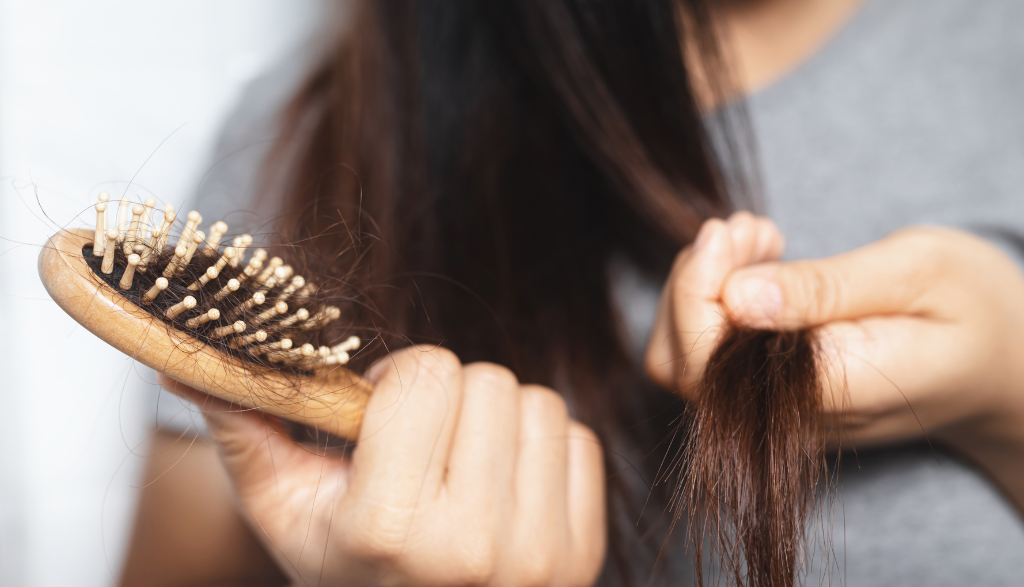

If you’ve noticed more hair in your shower drain or on your brush after starting Tirzepatide, you’re not alone. Hair loss on Tirzepatide is one of the more surprising things people notice during their weight loss journey. The good news? It’s almost always temporary. This article breaks down why it happens, how long it lasts, and what you can do about it.
What Is Tirzepatide and Why Does Hair Loss Happen?
Tirzepatide (sold as Mounjaro® and Zepbound®) is a once-weekly injectable medication. It works on two hormone receptors — GLP-1 and GIP — to help control blood sugar and support significant weight loss.
When you lose weight quickly, your body goes into a kind of “survival mode.” It redirects energy away from non-essential functions. Hair growth is one of those functions.
The result is a condition called telogen effluvium — a temporary form of hair shedding triggered by physical .
Here’s how it works:
- Normally, about 85–90% of your hair follicles are actively growing.
- During a stressful event like rapid weight loss, a larger portion of follicles shift into the “resting” phase.
- About 2–4 months later, those resting hairs shed all at once.
This is why many people don’t notice shedding until months after they start the medication. The tirzepatide itself isn’t damaging your follicles. Your hair roots are still alive. They’re just temporarily paused.
Is Hair Loss a Confirmed Side Effect?
Yes, it is documented. In the SURMOUNT-1 clinical trial, about 5.7% of participants taking the highest dose of tirzepatide reported hair loss, compared to 1% in the placebo group. In Zepbound’s prescribing data, the number is reported at around 4–5%.
It’s worth noting that:
- Women experience it more often than men (about 7.1% vs 0.5%)
- It tends to appear between weeks 8 and 20 of treatment
- No participants in clinical trials stopped the medication because of hair loss
So while it’s real, it’s rarely severe enough to require stopping treatment.
What Causes Hair Loss on Tirzepatide?
There are three main reasons people shed hair during tirzepatide therapy:
1. Rapid Weight Loss
Losing a lot of weight fast is a physical stress on your body. Studies on bariatric (weight loss surgery) patients show that up to 57% develop telogen effluvium after rapid weight loss. This tells us that it’s the weight loss process — not the drug itself — driving the hair shed.
2. Nutritional Deficiencies
Tirzepatide significantly reduces your appetite. This is great for weight loss, but it can also mean you’re eating less protein, iron, zinc, and vitamin D, all nutrients your hair needs to grow.
Hair is mostly made of a protein called keratin. Without enough dietary protein, your hair becomes weak, brittle, and more prone to falling out.
3. Physical and Emotional Stress
Significant body changes raise cortisol (your stress hormone). High cortisol can stop hair follicle cells from dividing, pushing them into the resting phase early.
Who Is at Higher Risk?
Not everyone on tirzepatide will experience hair shedding. You may be at higher risk if you:
- Lose weight very quickly
- Were already low in iron, zinc, or vitamin D before starting
- Have a thyroid condition or hormonal imbalance (e.g., PCOS)
- Have a personal or family history of pattern baldness
- Are going through perimenopause or menopause
If you fall into any of these groups, it’s worth talking to your provider before starting treatment so you can monitor your nutrient levels.
Will Hair Loss from Tirzepatide Stop?
Yes — in the vast majority of cases, it does stop. And your hair grows back.
Here’s a realistic timeline:
- Months 1–3: Weight loss begins; hair looks normal.
- Months 2–5: Shedding starts, often noticeably more than usual.
- Months 4–6: Shedding peaks, then begins to slow.
- Months 6–9: New hair growth becomes visible; most people see significant improvement.
Think of it this way: if someone starts tirzepatide in January and loses weight through spring, they might notice heavy shedding in April and May. By August or September, new growth is typically visible, and shedding has largely stopped.
You don’t need to stop taking tirzepatide to grow your hair back. Stopping the medication won’t automatically reverse the shedding if it’s caused by the weight loss itself or a nutrient gap.
How to Reduce Hair Loss While on Tirzepatide
You may not be able to prevent it entirely, but you can reduce how severe it is. Here are science-backed strategies:
Prioritize protein. Aim for at least 60–90g of protein per day. Even if your appetite is low, try smaller, more frequent meals and protein-rich snacks.
Check your micronutrients. Ask your doctor to test your ferritin (iron stores), zinc, and vitamin D. Supplement only where there’s an actual deficiency.
Don’t crash your calories. Eating too little speeds up nutrient loss. Even when you’re not hungry, eat structured meals.
Be gentle with your hair. Avoid tight hairstyles, excessive heat styling, and aggressive brushing. These won’t cause telogen effluvium, but they can make visible shedding look worse.
Consider minoxidil. If shedding is significant, a dermatologist may recommend topical minoxidil to stimulate regrowth.
Talk to your care team. Your physician can help adjust your plan, check for other causes (thyroid, hormones), and monitor your progress.
A Real-World Example
One case study published in JAAD Case Reports followed a male patient who experienced hair thinning linked to insulin resistance. After starting tirzepatide, he lost 20 pounds over 6 months — and saw significant improvement in hair density. After one full year, additional regrowth was observed with no other hair treatments used. This suggests that for some people, improving metabolic health through tirzepatide may actually benefit hair in the long run.
Getting Started With a Supervised Tirzepatide Program
If you’re considering tirzepatide for weight loss but are worried about side effects like hair shedding, starting with proper medical supervision makes a real difference.
TirzepatideRX Online offers a telehealth-based, physician-supervised weight loss program using once-weekly tirzepatide injections. Everything is handled from home — online consultations, a personalized treatment plan, home delivery, and ongoing medical check-ins.
Their pricing is straightforward:
- Monthly Plan — $399/month: Weekly injections, monitoring, and the flexibility to cancel anytime.
- 3-Month Plan — $1,125 total: Full medication supply, quarterly assessments, and priority support.
- 6-Month Plan — $2,199 total: Maximum savings, bi-monthly check-ins, premium support, and nutritional guidance included.
The nutritional guidance included in the longer plans is especially helpful for managing hair health during weight loss. You can start your journey here or explore more articles on the blog for additional guidance.
Final Thoughts
Hair loss on Tirzepatide is a real but temporary side effect for a small percentage of users. It’s not a sign of permanent damage. Your follicles are still alive — they’re just resting. With proper nutrition, medical guidance, and a little patience, most people see their hair recover fully within 6–9 months.
The key is not to go through this alone. A physician-supervised program gives you the support, monitoring, and nutritional guidance to manage side effects and stay on track toward your weight loss goals.
Frequently Asked Questions
Does tirzepatide directly cause hair loss?
No, the shedding is caused by rapid weight loss and nutritional stress, not the drug itself.
How long does hair loss on Tirzepatide last?
Most people see improvement within 6–9 months as weight stabilizes and nutrition improves.
Should I stop tirzepatide if I’m losing hair?
Not necessarily, talk to your doctor first, as stopping won’t automatically reverse shedding.
What nutrients help prevent hair loss on tirzepatide?
Protein, iron (ferritin), zinc, and vitamin D are most important for hair follicle health.
Can men and women both experience hair loss on tirzepatide?
Yes, but women are more likely to experience it, clinical data shows about 7.1% of women vs 0.5% of men.
Is the hair loss from tirzepatide permanent?
In almost all cases, no, it is temporary ,and hair grows back once your body adjusts.
Sources
- FDA Prescribing Information for Zepbound (Tirzepatide) — https://www.accessdata.fda.gov/drugsatfda_docs/label/2023/217806s000lbl.pdf
- SURMOUNT-1 Clinical Trial (Tirzepatide for Obesity) — New England Journal of Medicine — https://www.nejm.org/doi/full/10.1056/NEJMoa2206038
- Treatment of Insulin Resistance with Tirzepatide Leading to Improvement of Hair Loss — JAAD Case Reports / PubMed Central — https://pmc.ncbi.nlm.nih.gov/articles/PMC11318540/
- Telogen Effluvium — StatPearls, National Institutes of Health — https://www.ncbi.nlm.nih.gov/books/NBK547737/
- How Stress Causes Hair Loss — National Institutes of Health (NIH) — https://www.nih.gov/news-events/nih-research-matters/how-stress-causes-hair-loss
- Hair Anatomy — StatPearls, National Library of Medicine — https://www.ncbi.nlm.nih.gov/books/NBK513312/