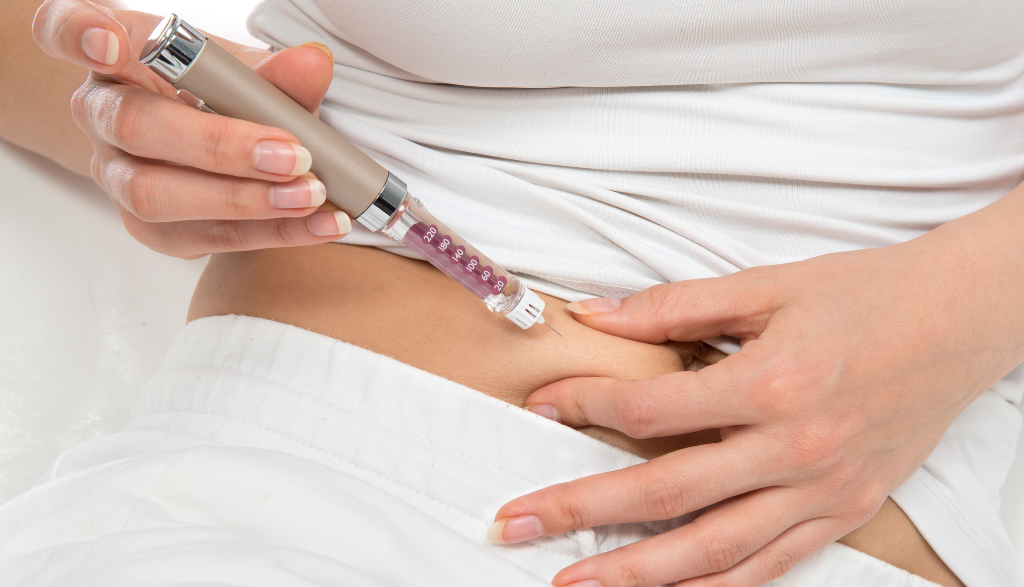
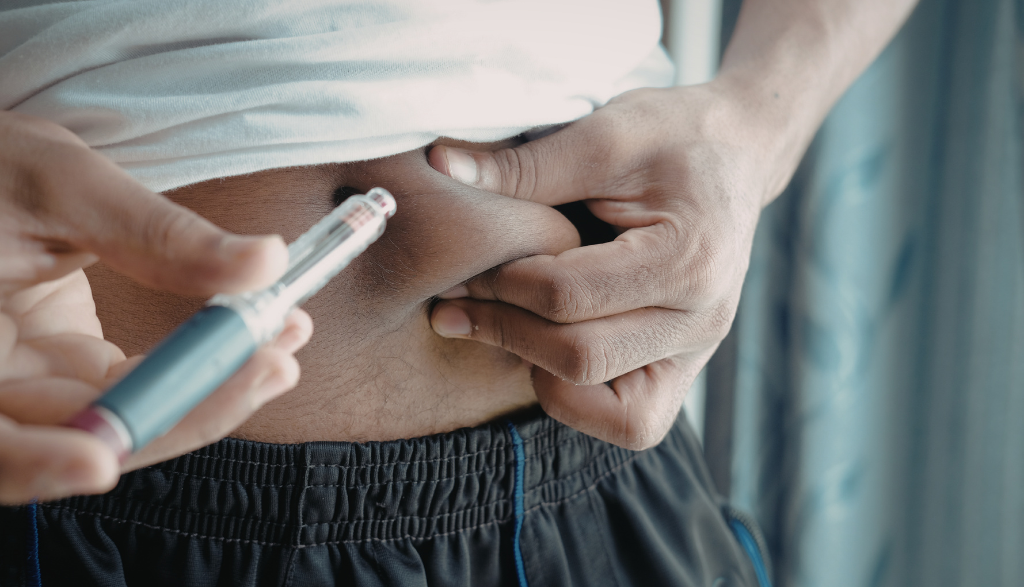

Weekly injections are effective. They’re also, for many people, a reason to hesitate before starting treatment. That’s why sublingual tirzepatide drops — drops placed under the tongue that claim to deliver tirzepatide without a needle — sound so appealing. One small dropper under the tongue each morning. No syringes. No pens. No injection anxiety.
But do they actually work?
This is not a question with a marketing answer. It’s a question with a pharmacology answer. And that answer matters — because the difference between a therapy that works and one that doesn’t is more than just money. It’s months of your life.
What Are Sublingual Tirzepatide Drops?
Sublingual tirzepatide drops are a compounded, non-FDA-approved form of tirzepatide delivered as a liquid placed under the tongue.
The idea: the tissue under the tongue (called the sublingual mucosa) contains a dense network of blood vessels. Medications that can be absorbed here bypass the digestive system and enter the bloodstream more directly than swallowed pills.
This is why sublingual delivery works well for small-molecule drugs like nitroglycerin (for heart conditions) or buprenorphine (for opioid dependence). Those molecules are small and fat-soluble, designed to cross tissue membranes easily.
Tirzepatide is not that kind of molecule.
The Core Problem: Tirzepatide’s Molecular Structure
Tirzepatide is a large peptide — approximately 4,810 daltons in molecular weight. That’s enormous compared to small-molecule drugs.
Large peptides face two specific problems with sublingual delivery:
Problem 1: Absorption barriers
The sublingual mucosa has a protective layer designed to resist large molecule absorption. Small drugs (under ~500 daltons) cross this layer relatively easily. Tirzepatide, at nearly 10 times that size, has a much harder time getting through.
Problem 2: Enzymatic degradation
Saliva contains enzymes that begin breaking down peptides immediately. Tirzepatide held under the tongue is exposed to these enzymes the entire time it’s dissolving.
The result: a significant portion of the drug may degrade or fail to absorb before ever reaching the bloodstream.
Here’s the critical fact: No published clinical trial has ever measured the sublingual bioavailability of tirzepatide in humans. Not one. Every claim about how well it works is based on extrapolation — not evidence.
What Does “Bioavailability” Mean and Why Does It Matter?
Bioavailability refers to how much of a drug actually reaches your bloodstream in active form.
Injectable tirzepatide (Zepbound/Mounjaro) achieves approximately 80% bioavailability when injected subcutaneously (under the skin). Clinical trials used this delivery method to establish the dosing that produces 15–22% average weight loss.
If sublingual tirzepatide drops achieve only 5% bioavailability (a generous assumption with no supporting data), you’d need approximately 16 times the injectable dose to reach equivalent blood levels. At that quantity, the cost of the drug alone would be astronomical — and side effects at those concentrations could be severe.
If bioavailability is even lower, the product simply doesn’t work. Not poorly. Just doesn’t work.
Without human pharmacokinetic studies, there’s no way to know what dose actually reaches the bloodstream. Providers prescribing sublingual tirzepatide are essentially guessing — and with a drug that needs to reach very specific blood levels to trigger weight loss, guessing is dangerous.
What Did User Reports Actually Show?
The clinical trial data doesn’t exist. But user reports from the period when sublingual tirzepatide was more widely available tell a mixed story.
Some patients reported:
- Mild appetite reduction (possibly consistent with lower blood levels of the drug)
- Fewer gastrointestinal side effects than injections (likely because less of the drug was reaching their system)
- No meaningful weight loss after 2–3 months
Other patients experienced:
- Tongue irritation and mouth discomfort
- Taste disturbances (tirzepatide has a bitter profile in liquid form)
- Inconsistent results month-to-month (suggesting variable absorption)
The positive pattern — milder side effects — is often taken as evidence the drops are working. It may actually be the opposite: fewer side effects because less drug is reaching effective concentrations.
The Regulatory and Safety Reality in 2026
Sublingual tirzepatide drops exist in a legally restricted space in 2026.
The FDA removed tirzepatide from its drug shortage list in October 2024. As of March 2025, large-scale compounding — including oral and sublingual formulations — was formally ended. A Texas federal court upheld this decision in May 2025.
503A compounding pharmacies can still produce tirzepatide in narrow circumstances — only when a patient has a specific, documented medical need that FDA-approved injectables cannot meet (such as a verified allergy to an excipient in Zepbound). Cost and preference for oral delivery are not qualifying reasons under current FDA guidance.
The FDA documented 480 adverse event reports tied to compounded tirzepatide products — including hospitalizations and potential deaths. While many of these involved injectable compounded products, oral formulations contributed to this record.
Some labs testing compounded tirzepatide products found:
- Products containing no tirzepatide whatsoever.
- Bacterial contamination.
- Incorrect concentrations that could lead to significant overdose.
How Sublingual Drops Compare to Proven Injectable Tirzepatide
| Factor | Sublingual Tirzepatide Drops | Injectable Tirzepatide (Zepbound) |
| FDA Approved | ❌ No | ✅ Yes |
| Clinical Trial Evidence | ❌ None | ✅ Extensive (SURMOUNT trials) |
| Bioavailability Data | ❌ Unavailable | ✅ ~80% |
| Average Weight Loss Evidence | ❌ Unknown | ✅ 15–22% in trials |
| Legally Available | ⚠️ Restricted | ✅ Yes |
| Safety Monitoring | ❌ Not regulated | ✅ Post-market surveillance |
| Dosing Consistency | ❌ Variable | ✅ Standardized |
A Fair Question: Could They Work for Some People?
The honest answer is: maybe, in theory, at some unknown dose — but there’s no way to know right now because the research hasn’t been done. There’s a version of a future where oral or sublingual tirzepatide formulations are developed, tested in rigorous clinical trials, dosed appropriately, and found to produce meaningful weight loss. That future might exist. It does not exist yet in 2026. Anyone telling you otherwise is selling something, not sharing evidence.
What to Do Instead If You Can’t Do Injections
If needle anxiety is genuinely preventing you from starting a medication that could significantly improve your health, here are real options:
Option 1: Work with your provider on injection technique
Most injection anxiety resolves after the first or second dose. The Zepbound pen needle is very small. Many patients who were convinced they couldn’t do it report that it becomes routine within two weeks.
Option 2: Try oral semaglutide (Wegovy pill)
As of December 2025, the FDA approved oral Wegovy — a 25 mg semaglutide tablet. This is a legitimate, clinical trial-backed, needle-free option for weight management. It’s not tirzepatide, but it’s real medicine that works.
Option 3: Choose an injectable program with expert support
A physician-supervised program can walk you through the injection process step by step, address your anxiety directly, and provide ongoing support that makes the weekly shot feel manageable.
A Structured Program That Supports First-Time Injectors
TirzepatideRX Online is designed for real patients — including those who are nervous about injections. Their physician team provides personalized guidance, hands you through the injection process at your pace, and offers ongoing check-ins to make sure you feel confident. Their program uses FDA-approved injectable tirzepatide — the same medication proven in clinical trials — with home delivery, physician supervision, and continuous support.
Pricing options:
- Monthly Plan – $399/month (weekly tirzepatide injections, physician monitoring, no long-term obligation).
- 3-Month Plan – $1,125 total (full medication supply, quarterly physician reviews, priority response).
- 6-Month Plan – $2,199 total (maximum savings, bi-monthly check-ins, nutritional coaching, premium support).
Rather than spending money on sublingual tirzepatide drops with no evidence base, this kind of structured approach gives you access to the real thing — safely. Begin your journey here or explore additional resources on the blog.
Real-World Example: Why Anna Switched From Drops to Injections
Anna, 46, used compounded tirzepatide sublingual drops for three months before her provider discontinued them. She had mild appetite reduction but no significant weight change.
After starting injectable Zepbound through a physician-supervised telehealth program, she noticed a difference within 10 days. By month three, she had lost 16 pounds — something the drops had not produced in the same timeframe.
“The drops were convenient but they clearly weren’t doing enough. The injection is a small moment of discomfort once a week. The results are completely different.”
Frequently Asked Questions
Do sublingual tirzepatide drops work for weight loss?
No clinical trial data exists to confirm their effectiveness; injectable tirzepatide is the only form with proven weight loss outcomes in large-scale trials.
Are sublingual tirzepatide drops FDA-approved?
No — there is no FDA-approved sublingual or oral form of tirzepatide; only injectable Zepbound and Mounjaro are FDA-approved.
Why do some people report results from sublingual tirzepatide drops?
Some absorption may occur sublingually, but without bioavailability data, it’s impossible to know how much drug reaches the bloodstream or whether results are placebo-influenced.
Are sublingual tirzepatide drops still legal in 2026?
Large-scale compounding is banned; narrow exceptions exist only for patients with a documented medical need that the FDA-approved injectable cannot meet — preference for oral delivery doesn’t qualify.
What’s the safest needle-free GLP-1 option in 2026?
Oral Wegovy (semaglutide 25 mg pill), approved by the FDA in December 2025, is currently the only legitimate, clinically proven needle-free GLP-1 option for weight management.
Sources
- FDA — Zepbound Full Prescribing Information: https://www.accessdata.fda.gov/drugsatfda_docs/label/2024/217806s003lbl.pdf
- FDA — Concerns with Unapproved GLP-1 Drugs for Weight Loss: https://www.fda.gov/drugs/postmarket-drug-safety-information-patients-and-providers/fdas-concerns-unapproved-glp-1-drugs-used-weight-loss
- NCBI/StatPearls — Tirzepatide Pharmacology & Administration: https://www.ncbi.nlm.nih.gov/books/NBK585056/
- NIH — Tirzepatide SURMOUNT Weight Loss Trials: https://pubmed.ncbi.nlm.nih.gov/