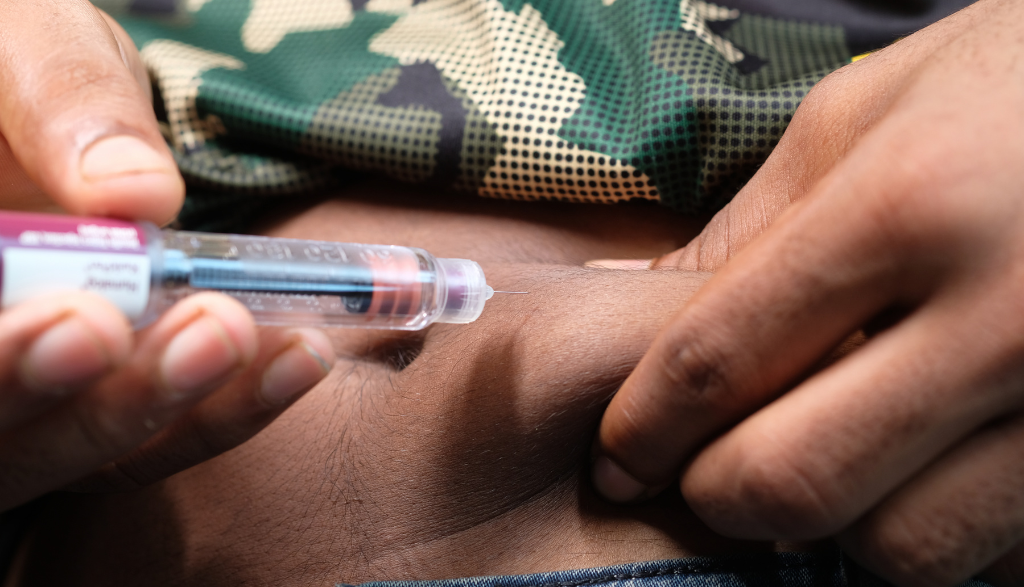


People talk a lot about tirzepatide’s physical effects — the weight loss, the blood sugar improvements, the nausea. But there is a quieter conversation happening that deserves more attention. How does this medication affect your mind? Tirzepatide and mental health is a topic that many patients wonder about, but few ask openly. Some people feel emotionally lighter on tirzepatide. Others report irritability, anxiety, or a flat, disconnected feeling. And some worry about what they’ve seen in headlines about GLP-1 drugs and mood.
This article covers what the science actually says — and what to watch for in yourself.
Why Tirzepatide Can Affect How You Feel Emotionally
Tirzepatide is a dual GLP-1 and GIP receptor agonist. Most discussions focus on what these hormones do in the gut and pancreas. But GLP-1 and GIP receptors are also found in the brain — in areas that regulate appetite, mood, motivation, and reward.
This means tirzepatide isn’t only changing how your stomach feels. It may be changing how your brain processes hunger, cravings, satisfaction, and — to some degree — emotions.
Researchers are still learning exactly how this works. But the connection between the gut-brain axis, metabolic hormones, and emotional states is well established in scientific literature. When tirzepatide changes the hormonal environment in your body, your emotional experience can shift too.
The Positive Side: Many People Feel Better
Here’s something that often gets missed in the fear-based headlines: for many patients, tirzepatide and mental health is a good news story.
A published case series in The Journal of Clinical Psychiatry described two patients — both with histories of depression — who experienced rapid mood improvement after starting tirzepatide. Notably, this happened before significant weight loss occurred. That’s important. It suggests the emotional benefit may come from how tirzepatide acts on the brain directly, not just from feeling better in your body as you lose weight.
Other research has found that people with type 2 diabetes who take GLP-1 medications like tirzepatide are less likely to be diagnosed with anxiety and depression compared to those who don’t. A 2024 dataset published in peer-reviewed literature showed GLP-1 users had lower rates of anxiety and depressive disorders.
Additionally, research published in Frontiers in Psychiatry analyzing real-world data found that tirzepatide was associated with a reduced risk of suicidal ideation, not an increased one.
The data overall is largely encouraging.
The Other Side: When Mood Can Worsen
It would not be accurate to say tirzepatide improves everyone’s mood. A small subset of patients reports the opposite.
A pharmacovigilance analysis published in PMC reviewed adverse event reports for GLP-1 medications, including tirzepatide. Out of over 31,000 reports submitted, psychiatric events made up just 1.18% of total reports — a small but real number. Among those, the most common were depression (50.3%), anxiety (38.7%), and, in rarer cases, suicidal ideation.
These numbers should be understood in context: they represent a very small proportion of users, psychiatric events were not significantly more common with tirzepatide than placebo in major clinical trials, and many of these patients had pre-existing mental health conditions.
The FDA reviewed the available data and did not require additional psychiatric warning labels. But the agency does recommend ongoing monitoring for mood and behavioral changes in patients prescribed these medications.
Why Some Patients May Feel Anxious or Flat
There are several practical reasons mood changes can happen early in tirzepatide treatment — reasons that have nothing to do with the drug acting directly on brain chemistry.
Caloric reduction: Tirzepatide significantly suppresses appetite. If you’re eating far less than your body is used to, your energy levels and mood can drop. Low blood sugar or nutritional deficits can mimic anxiety or depression.
Nausea and physical discomfort: Feeling sick for days at a time is genuinely miserable. That misery affects your emotional state.
Changes in eating patterns: For some people, food is deeply tied to comfort, social life, and routine. When tirzepatide removes the urge to eat, it can feel disorienting — almost like losing something familiar.
Hormonal shifts: Rapid changes in weight affect hormones like estrogen, cortisol, and thyroid function. These shifts can temporarily affect mood.
Understanding why you feel a certain way helps you — and your provider — respond appropriately.
A Patient’s Story: Both Sides of the Experience
Rachel, 36: “The first month was emotionally rough. I felt flat, a little irritable, like I wasn’t myself. My provider told me to track my eating — turns out I was barely eating 900 calories a day because my appetite was so suppressed. Once we fixed that, my mood completely stabilized. I actually feel calmer now than I have in years.”
David, 58: “I’ve dealt with mild depression for a long time. Within six weeks of starting tirzepatide, something shifted. I felt more motivated. I wanted to go for walks. I didn’t feel like food controlled me anymore. It’s hard to explain, but I feel lighter in every sense.”
Both experiences are valid. Both reflect real aspects of how tirzepatide and mental health interact differently from person to person.
Who Should Be Extra Cautious
If you have a history of any of the following, discuss it with your provider before starting tirzepatide:
- Major depressive disorder.
- Generalized anxiety disorder.
- Bipolar disorder.
- History of suicidal ideation or attempts.
- Active psychiatric medication management.
This doesn’t mean tirzepatide is off-limits. In fact, for some of these patients, the effects may be beneficial. But closer monitoring during the first weeks — especially around dose increases — is important.
What to Monitor and When to Speak Up
Track these things in a simple daily journal or app:
- Mood (on a scale of 1 to 10)
- Energy level
- Sleep quality
- Appetite and food intake
- Any episodes of anxiety or low mood
Speak to your provider if:
- Low mood or anxiety lasts more than two weeks without improvement.
- You feel emotionally numb, detached, or unlike yourself.
- You have thoughts of self-harm or hopelessness.
- Side effects like nausea are so intense that they’re affecting your mental state.
You don’t have to wait for a scheduled check-in. Good provider relationships include reaching out between appointments.
Choosing a Program That Supports Your Whole Health
Weight loss is not just physical. It involves how you feel, how you function, and how you show up in the world. That’s why physician-supervised care matters — especially when navigating the emotional dimension of a treatment like tirzepatide.
TirzepatideRX Online provides a telehealth-based, physician-supervised Tirzepatide program that includes personalized treatment planning, weekly injections delivered to your home, and ongoing provider access — including support for questions about Tirzepatide and mental health changes you may be experiencing.
Their programs are built for real life:
- Monthly – $399/month: Week-by-week support, injections included, no long-term lock-in.
- 3-Month – $1,125 total: Full supply, quarterly assessments, priority provider communication.
- 6-Month – $2,199 total: Best value, bi-monthly check-ins, nutritional coaching, and premium support.
If you’re wondering how tirzepatide might affect your mood or emotional well-being, don’t guess — ask a provider. Start here or browse patient-focused articles on the blog.
Frequently Asked Questions (FAQ)
Can tirzepatide cause anxiety?
Some patients report early anxiety, often linked to side effects or reduced food intake, but large clinical trials did not show tirzepatide causes anxiety significantly more than placebo.
Can tirzepatide improve depression?
Emerging case reports and some population-level data suggest it may — particularly through direct effects on the brain’s reward and mood systems — though more research is needed.
Should I stop tirzepatide if I feel depressed?
Do not stop without speaking to your provider first — they can assess whether tirzepatide, lifestyle changes, or other factors are responsible and guide next steps appropriately.
Is the FDA warning about suicidal thoughts from GLP-1 drugs?
After a thorough review, the FDA did not find a clear causal link between tirzepatide and suicidal ideation, though monitoring for mood changes is still recommended.
How long do mood changes last on tirzepatide?
Most early mood changes — positive or negative — tend to stabilize within 4 to 8 weeks as the body adjusts to the medication and its effects.
Sources
- The Psychiatrist – Mental Health Effects of Tirzepatide: A Report of 2 Patients: https://www.psychiatrist.com/pcc/mental-health-effects-tirzepatide-report-2-patients/
- PubMed Central – Psychiatric Adverse Events With Semaglutide, Liraglutide, and Tirzepatide (EudraVigilance Analysis): https://pmc.ncbi.nlm.nih.gov/articles/PMC10960895/
- Frontiers in Psychiatry – Association of Tirzepatide and Risk of Suicide in a Real-World Cohort: https://www.frontiersin.org/journals/psychiatry/articles/10.3389/fpsyt.2025.1626103/full
- Wiley – Psychiatric Safety of Tirzepatide in SURMOUNT Trials Post Hoc Analysis: https://onlinelibrary.wiley.com/doi/full/10.1002/oby.70122
- National Institute of Mental Health – Understanding Depression and Anxiety: https://www.nimh.nih.gov/health/topics/depression