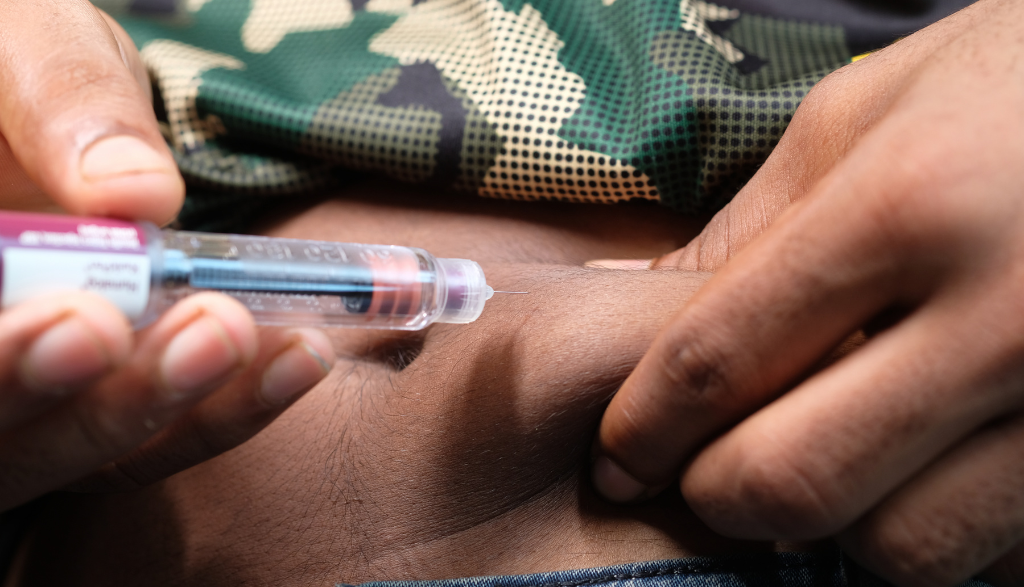


Tirzepatide delivers results that many patients describe as life-changing. Improved blood sugar, lower blood pressure, significant weight loss, and a quieter relationship with food. But what happens when the medication stops — and the weight slowly comes back?
What happens to your body if you regain weight after stopping Tirzepatide is one of the most important questions in modern weight management. And the clinical answer is more serious than most people realize.
Why Weight Comes Back After Stopping Tirzepatide
Tirzepatide works by activating GLP-1 and GIP hormone receptors. These hormones slow down how fast your stomach empties, signal fullness to your brain, and improve how your body manages blood sugar. They reduce what many patients call “food noise” — the constant mental chatter about eating.
When you stop the medication, these effects gradually fade. Your stomach empties faster. Hunger returns. The brain’s appetite signals reset to their previous baseline — which, for most people dealing with obesity, is higher than average. This is not a failure of willpower. It’s biology.
Clinical data from the SURMOUNT-4 trial, published in JAMA Internal Medicine, found that 82% of patients who stopped tirzepatide regained at least 25% of their weight loss within one year. Many regained far more.
What the SURMOUNT-4 Data Actually Shows
This wasn’t a small study. The SURMOUNT-4 trial followed adults with obesity through 36 weeks of tirzepatide treatment, then split participants into two groups: those who continued and those who switched to a placebo (simulating stopping the drug).
Results at week 88 (one year after stopping):
- Patients who continued tirzepatide lost an additional 5.5% of body weight.
- Patients who stopped regained 14% of their body weight.
- 82.5% of those who stopped had regained at least 25% of their initial weight loss.
- Some patients regained 75% or more of the weight they had lost.
These aren’t edge cases. Weight regain after stopping tirzepatide is the expected outcome for most people — not the exception.
The Health Risks of Regaining Weight: Beyond the Scale
Here is the part that often doesn’t make the headlines.
What happens to your body if you regain weight after stopping Tirzepatide goes far beyond dress sizes or pants fitting differently. The SURMOUNT-4 data showed that cardiometabolic health markers — the numbers that predict your risk of heart attack, stroke, and diabetes complications — reversed alongside the weight gain.
Specifically, patients who regained the most weight saw:
- Increased waist circumference — visceral fat (fat around organs) returns
- Rising blood pressure — systolic BP increased by up to 10.4 mmHg in those with the most weight regain
- Higher HbA1c — blood sugar control worsened
- Worsening non-HDL cholesterol — cardiovascular risk marker increased
- Rising fasting insulin levels — a sign of worsening insulin resistance
In patients who regained 75% or more of their lost weight, these cardiometabolic markers returned to baseline — essentially undoing a year of progress.
Why This Matters: Obesity Is a Chronic Disease
Many patients think of tirzepatide as a short-term tool — use it to lose the weight, then stop. But that’s not how obesity medicine works.
Dr. Louis Aronne, director of the Comprehensive Weight Control Center at Weill Cornell Medicine and lead author of the SURMOUNT-4 study, put it directly: “If you stop the medication, you regain the weight. There’s no question that will happen.” He compared it to stopping blood pressure medication — the condition returns because the medication was treating an ongoing disease, not curing it.
Obesity has biological drivers that don’t disappear after weight loss. The body actively defends a higher weight set point. Without continued treatment, those drivers push the weight back.
A Real Patient’s Perspective
Jennifer, 49, lost 34 pounds over 10 months on a physician-supervised tirzepatide program. She stopped the medication due to cost and felt confident she could maintain her results through diet alone.
“Within six months, I had regained almost 20 pounds. My blood pressure went back up. My doctor was concerned. It felt like the rug had been pulled out from under me. I thought I had fixed the problem — I didn’t realize the medication was the thing keeping the fix in place.”
Her experience reflects what the clinical literature consistently shows: tirzepatide is a long-term treatment, not a jump-start.
Can You Prevent Weight Regain After Stopping?
Completely preventing regain is difficult without continued treatment. But some strategies help reduce how much comes back:
During your program:
- Build sustainable eating habits — not a crash diet — while on tirzepatide.
- Prioritize protein intake to preserve muscle mass during weight loss.
- Develop a consistent exercise routine that you’ll maintain after stopping.
After stopping tirzepatide:
- Work with a provider to taper the dose gradually rather than stopping abruptly.
- Schedule regular follow-up appointments to monitor weight and metabolic markers.
- Consider a lower maintenance dose rather than stopping completely.
- Track weight weekly and respond early to upward trends.
Even small regains, if caught and addressed early, are much easier to manage than a significant rebound.
What Your Options Look Like
If you’ve regained weight after stopping tirzepatide, or if you’re considering stopping and want a plan, physician-supervised care is the most effective option.
TirzepatideRX Online provides ongoing, telehealth-based physician care for patients throughout their tirzepatide journey — including those thinking about long-term treatment. Their program includes home delivery, online consultations, personalized plans, and provider support to help you make informed decisions about continuing, pausing, or adjusting your treatment.
Pricing is structured to make long-term care accessible:
- Monthly – $399/month: Ongoing weekly injections, monitoring, and no long-term commitment.
- 3-Month – $1,125 total: A complete supply at a better rate, with quarterly assessments.
- 6-Month – $2,199 total: Maximum savings, bi-monthly check-ins, nutritional coaching, and premium provider access.
If you’re asking what happens to your body if you regain weight after stopping Tirzepatide — the best answer starts with not stopping alone. Talk to a provider about your options here or read more about long-term weight management on the blog.
Frequently Asked Questions (FAQ)
How quickly does weight return after stopping tirzepatide?
In clinical trials, significant weight regain typically began within weeks of stopping and became substantial within six to twelve months.
Do all the health benefits reverse when you regain weight?
For patients who regain most of their weight, cardiometabolic improvements — including blood pressure, blood sugar, and cholesterol — largely reverse to pre-treatment levels.
Is there a way to maintain weight loss without staying on tirzepatide forever?
Some patients maintain results through lifestyle changes, but clinical data shows the majority regain significant weight without continued treatment.
Can I restart tirzepatide after stopping?
Yes, but restart under medical supervision — your provider may recommend beginning at a lower dose to avoid severe side effects.
Is weight regain after stopping tirzepatide considered a treatment failure?
No — it reflects the chronic nature of obesity as a disease, not personal failure; it signals that continued treatment may be medically appropriate.
Sources
- JAMA Internal Medicine – SURMOUNT-4 Post Hoc Analysis, Cardiometabolic Parameter Changes by Weight Regain: https://jamanetwork.com/journals/jamainternalmedicine/fullarticle/2841273
- Weill Cornell Medicine – SURMOUNT-4 Study Summary: https://news.weill.cornell.edu/news/2023/12/tirzepatide-enhances-weight-loss-with-sustained-treatment-but-discontinuation-leads-to
- PubMed Central – Weight Regain After GLP-1 RA Interruption: Narrative Review: https://pmc.ncbi.nlm.nih.gov/articles/PMC12155999/
- Endocrinology Advisor – Tirzepatide Withdrawal and Reversal of Cardiometabolic Benefits: https://www.endocrinologyadvisor.com/news/tirzepatide-withdrawal-weight-regain-reversal/
- National Institutes of Health – Obesity as a Chronic Disease: https://www.niddk.nih.gov/health-information/weight-management/adult-overweight-obesity