
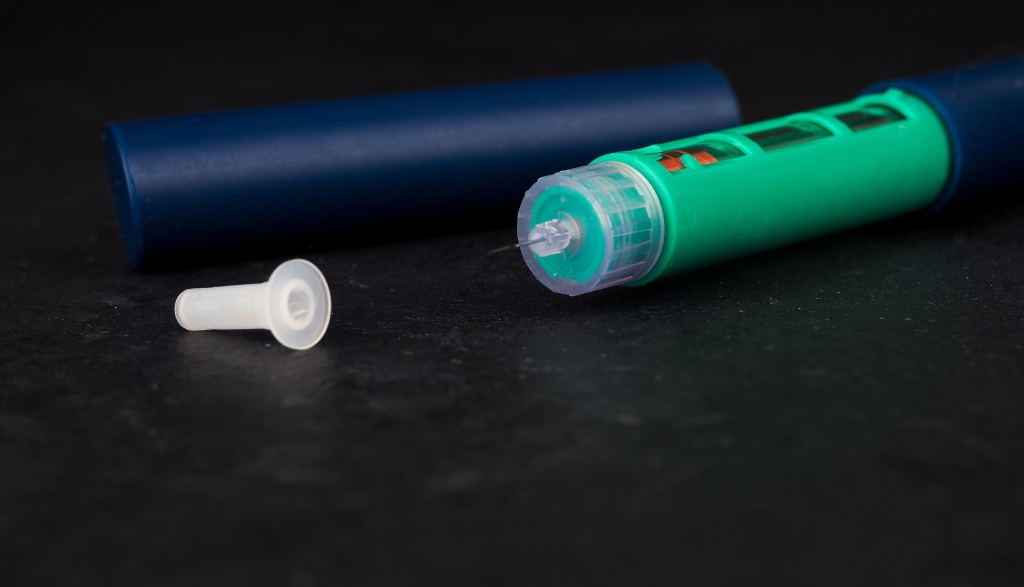

When starting Tirzepatide, one of the first practical questions you may face is: Tirzepatide pen vs. vial — which is better for me?
Both options contain the same active ingredient and deliver the same clinical results. But they differ in a meaningful way when it comes to ease of use, cost, availability, and what is required from you as a patient. Understanding those differences helps you make a more informed decision with your doctor.
This guide breaks down Tirzepatide pen vs. vial in plain language so you can walk into your next appointment with a clear idea of what you want.
What Are the Two Formats?
Tirzepatide (sold as Zepbound for weight management and Mounjaro for type 2 diabetes) is available in two main delivery formats:
1. The Prefilled Autoinjector Pen
A single-use, ready-to-inject device. Each pen holds one pre-measured dose. You press it against your skin, click a button, and the injection is done. No measuring, no drawing from a vial.
2. The Single-Dose Vial
A small glass vial containing one dose of liquid medication. You draw the correct amount into a separate sterile syringe, then inject it manually. This requires more steps and more precision.
Both formats are FDA-approved. Both deliver tirzepatide subcutaneously (just under the skin). According to bioequivalence studies referenced in Eli Lilly’s medical documentation, the efficacy and safety of tirzepatide are expected to be comparable across both formats when given at the same dose.
The difference is entirely in the user experience.
Tirzepatide Pen: What You Need to Know
How It Works
The autoinjector pen comes pre-loaded with your prescribed dose. Here is the basic process:
- Remove the pen from the refrigerator. Let it reach room temperature for a few minutes.
- Check the liquid window — it should be clear and colorless.
- Place the pen flat against your skin at the injection site (abdomen, thigh, or upper arm).
- Unlock the pen and press the injection button.
- Hold it in place. You will hear two clicks — wait for the second.
- Remove, dispose of the pen safely.
That is it. The needle is concealed inside the device, which reduces anxiety for people who are new to injections.
Pros of the Pen
- Simple and fast — the whole injection takes under 30 seconds.
- Pre-measured dose — no risk of measurement error.
- Discreet — the needle is hidden; less intimidating for first-time users.
- Portable — easy to travel with and handle on the go.
- Available in all doses — 2.5 mg, 5 mg, 7.5 mg, 10 mg, 12.5 mg, and 15 mg.
- May be covered by insurance — commercial insurance or manufacturer savings programs may apply.
Cons of the Pen
- Higher list price — without insurance or savings programs, pens can cost significantly more out-of-pocket.
- Single use only — each pen is used once and discarded.
- Requires separate prescription access — available through standard pharmacies with a valid prescription.
Tirzepatide Vial: What You Need to Know
How It Works
The vial format requires a few more steps:
- Gather your supplies: the vial, a sterile syringe, a needle, and an alcohol swab.
- Clean the rubber top of the vial with an alcohol swab.
- Draw the prescribed volume of medication into the syringe carefully, removing any air bubbles.
- Inject subcutaneously at a 45-degree angle.
- Dispose of the needle and syringe safely in a sharps container.
This process takes longer and requires more attention to detail. A small measurement error — even a fraction of a milliliter — can result in receiving slightly more or less than your prescribed dose.
Pros of the Vial
- Lower cost — vials are available at significantly reduced self-pay prices compared to pens.
- Same medication — identical active ingredient and therapeutic effect.
- Dose flexibility — some providers use vials to trial smaller starting doses before escalating.
- Good for experienced injectors — people already familiar with syringe injections adapt easily.
Cons of the Vial
- More steps — requires gathering supplies, drawing medication, and careful measurement.
- Room for error — if the volume is measured incorrectly, the dose may be off.
- Not available at standard pharmacies — vials are currently available only through specific direct-to-patient channels.
- Cash pay only — insurance does not currently cover Tirzepatide vials.
- Requires additional supplies — you must have sterile syringes and needles on hand.
Side-by-Side Comparison
| Feature | Autoinjector Pen | Vial + Syringe |
| Ease of use | Very easy | Requires training |
| Dose accuracy | Pre-measured | Manually measured |
| Cost (self-pay) | Higher | Lower |
| Insurance coverage | Potentially covered | Not covered |
| Available doses | 2.5 mg – 15 mg | 2.5 mg – 15 mg |
| Pharmacy availability | Standard pharmacies | Specialty/direct channels |
| Travel convenience | Easy | Slightly more supplies needed |
| Risk of error | Minimal | Possible with poor technique |
Real Patient Perspective: Two Different Choices
David, 49, from Oregon, chose the autoinjector pen when he started Tirzepatide. He had never self-injected before and found the pen approachable. “I was honestly terrified of needles. The pen made it feel almost like pressing a button. I barely feel anything. I would not switch.”
Maria, 37, from Texas, started on the pen but switched to the vial format after six months for cost reasons. Her insurance did not cover Tirzepatide. “My husband showed me how to do the syringe properly. The first couple of times were awkward, but now it takes maybe two minutes. The savings are significant for our family.”
Both are using the same medication with the same results. The right choice comes down to individual comfort level and financial situation.
What About Compounded Tirzepatide?
You may have seen references to compounded tirzepatide formulations made by third-party compounding pharmacies. These became common during periods of brand-name Tirzepatide shortage.
It is important to understand the current status:
The FDA has declared that Tirzepatide (Zepbound) is no longer in shortage. As a result, compounding of tirzepatide has been significantly restricted. The FDA has issued guidance noting that patients should not use compounded drugs when an approved drug is available.
The agency has also received reports of adverse events associated with compounded tirzepatide — including dosing errors related to concentration and measurement. The safest and most reliable option is FDA-approved Tirzepatide from Eli Lilly in either the pen or vial format.
Which One Is Right for You? A Simple Decision Guide
Ask yourself these questions:
Are you new to self-injections? → Start with the pen. The learning curve is nearly zero, and the pre-measured dose removes any guesswork.
Do you have insurance that covers Tirzepatide? → The pen may be your best value with insurance or manufacturer savings programs.
Are you paying out of pocket and watching costs? → The vial format offers significant savings and contains the exact same medication.
Are you already comfortable with syringe injections? → Either format works, but the vial may be a cost-effective choice.
Do you travel frequently? → The pen is more portable and convenient. Fewer supplies to manage.
Your doctor is the best person to guide this decision based on your full medical picture.
How TirzepatideRX Online Fits In
Whether you are deciding between a pen and vial for the first time, or switching formats, having physician support makes the process smoother.
TirzepatideRX Online provides a fully supervised telehealth program with once-weekly Tirzepatide delivered to your door. Online consultations, personalized treatment plans, and ongoing medical check-ins are built into every plan — so you always have a physician to answer questions about format, dosing, and technique:
- Monthly Plan — $399/month: Flexible access to weekly injections, monitoring, and the freedom to adjust your plan as needed.
- 3-Month Plan — $1,125 total: Full medication supply with quarterly assessments and priority support.
- 6-Month Plan — $2,199 total: Maximum savings paired with bi-monthly physician check-ins, premium support, and personalized nutritional guidance — the most comprehensive option for committed patients.
Begin your Tirzepatide journey here with expert medical support guiding every step. For more educational content, visit the TirzepatideRX blog.
The Bottom Line
When it comes to Tirzepatide pen vs. vial, there is no universally “better” option. The medication is identical. What differs is the experience of using it. If you prioritize ease of use, convenience, and simplicity — especially as a first-time injector — the pen is a natural fit. If you are cost-conscious and comfortable with syringes, the vial offers the same clinical benefit at a lower price. Talk to your doctor, consider your lifestyle, and choose the format you can stick with consistently. Consistency is what drives results — not which delivery device you use.
Frequently Asked Questions
Is the Tirzepatide pen or vial more effective?
Both deliver the same active ingredient at the same dose with comparable efficacy and safety, as confirmed by FDA bioequivalence data — the difference is only in how the medication is administered.
Which is cheaper — the pen or the vial?
Vials are typically available at a lower self-pay price than pens, though pens may be covered by commercial insurance or manufacturer savings programs that vials are not eligible for.
Is the vial safe to use at home?
Yes, with proper training from your healthcare provider — though it requires careful dose measurement and sterile technique, making it better suited for patients who are comfortable with syringes.
Do I need a prescription for both the pen and the vial?
Yes — both the autoinjector pen and the single-dose vial require a valid prescription from a licensed healthcare provider.
Can I switch from a vial to a pen or vice versa?
Yes — since both contain the same medication and doses, switching formats is straightforward with your doctor’s guidance and does not affect your treatment progress.
Sources
- FDA — Zepbound (Tirzepatide) Prescribing Information
- FDA — Compounding and Drug Shortages Guidance
- NEJM — SURMOUNT-1: Tirzepatide for the Treatment of Obesity
- MedlinePlus — How to Give Yourself a Subcutaneous Injection